LEGO bricks have long outgrown the boundaries of the children's room. For many adults they have become a relaxing hobby, a design element for the home, and even an opportunity to put money to work meaningfully. Selected LEGO sets, collectible minifigures, and premium models from limited editions build a long-term position on the secondary market after their sale ends – and some pieces appreciate in value surprisingly better than traditional investment instruments. That the brand is attracting more and more people is confirmed by the numbers. In 2025, LEGO recorded record revenues and consumer sales grew year-on-year by 16 %, while the entire toy market grew by only 7 %. A strong brand alone, however, does not guarantee appreciation. In collectible pieces, the main roles are played by rarity, the quality of the preserved packaging, and demand at the moment you decide to sell. In the following chapters we will break down how this market works in practice, what to look for –
and which specific LEGO models discontinued in 2026 should feature on your LEGO investment list.
LEGO Sets as an Investment: Which Models to Focus on in 2026? – CONTENTS
- Why does the value of LEGO sets grow over time?
- Market context: the brand grows, adults buy
- How to choose a LEGO set with collectible potential?
- LEGO sets confirmed for retirement in 2026
- Which LEGO themes do collectors follow the most?
- The most valuable LEGO sets in the world
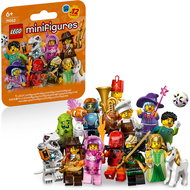
- LEGO minifigures: small pieces, great collectible value
- Storing LEGO sets: a detail that can determine the price
- How and where to sell LEGO sets?
- Frequently asked questions about LEGO sets as an investment
- In conclusion: LEGO sets as a collectible opportunity with common sense
Why does the value of LEGO sets grow over time?
The key moment in the life of any LEGO set comes when the company discontinues its production. While a model is available through regular distribution, buyers can pick it up at the recommended retail price – often even at a discount. But once it disappears from store shelves, the situation reverses. Supply gradually dries up, some sets end up in the hands of builders who open and assemble them, and the number of intact, unsealed copies starts to drop quickly.
If interest in the model persists, the price on the secondary market naturally responds by rising. This applies in particular to sets with a strong licence, iconic models, and pieces with exclusive minifigures that cannot be obtained anywhere else. Long-term drivers include sets from LEGO® Star Wars, LEGO® Technic, LEGO® Ideas and LEGO® Icons. Nostalgia also plays a natural role – collectors love returning to models that carry an emotional charge.
The condition of the piece has a significant impact as well. The community follows a fairly unforgiving rule: a sealed, undamaged box holds the highest value. Dents, torn shrink-wrap, warehouse-label stickers, or a missing instruction booklet can slash the price by tens of percent. With collectible sets, it is therefore not purely about the LEGO bricks – the packaging is an integral part of the product.
Price growth is not guaranteed, however. A set with a well-known name may see surprisingly weak demand, and value can be torpedoed by a re-release, a high original production run, or simply changing collector tastes. With LEGO investments, patience and market knowledge work better than speculation.

Market context: the brand grows, adults buy
2025 confirmed that the adult-builders phenomenon is not a passing trend but a long-term shift. LEGO increased revenues by 12 % to approximately €11.2 billion and operating profit climbed to roughly €2.95 billion. For context, the brand grew more than twice as fast as the entire global toy market.
Behind the figures, however, lies a more interesting story. LEGO has been deliberately shifting its attention to adult fans, and the product portfolio reflects that. Among the best-selling themed sets of 2025 were models from LEGO® Technic, LEGO® Star Wars, LEGO® Icons and LEGO® Botanicals – models that are not toys in the traditional sense, but serve as display pieces and collectibles, leisure-time projects, or gifts for someone who wants to switch off from screens. Interest in offline hobbies and tangible objects is growing globally, and LEGO sets are benefiting enormously from that trend.
For the secondary market this has a direct consequence: more people searching for a retired model. The most pronounced effect is felt with sets that have a licensed theme, a limited number of units, and authentic, detailed craftsmanship. Typical candidates are sets from the LEGO® Star Wars Ultimate Collector Series or larger Technic models at 1:8 scale.
It is important, however, to keep a level head. Brand growth does not automatically mean value growth for every set. It always depends on the specific model, its availability, the quality of the contents, and demand at any given moment. Sweeping conclusions simply do not apply here.

How to choose a LEGO set with collectible potential?
Box size and piece count are not reliable indicators of future value. What matters far more is the reason a given model would still interest someone five years after it is retired. Before making a purchase, run through this practical checklist.
- Theme with a strong following: Licensed lines such as LEGO Star Wars, LEGO Harry Potter, LEGO Marvel, or licensed cars (Ferrari, Lamborghini, Porsche) have historically shown a higher chance of collector interest than generic themes.
- Approaching end of production: Models in the final months before retirement often offer the most attractive price-to-potential ratio. Keep an eye on official retiring-sets lists.
- Exclusive minifigures and unique elements: A LEGO minifigure that will never appear anywhere else can significantly increase the value of an entire set and elevate it to collectible status. The same applies to special elements – fabric shoelaces, a film strip, a photograph – that are unlikely to survive into any future re-release.
- Sensible size: A tried-and-tested truth: smaller and medium-sized models are often more advantageous than giant flagship sets. They store more easily, cost less to ship, and attract a wider pool of buyers. A large set priced at CZK 20,000 also means a higher entry barrier and logistical complications at resale.
- Perfect packaging condition: The ideal is an unsealed LEGO set with a clean, undamaged box. If you are buying with investment intent, inspect the box at the moment of receipt. Crushed corners or torn shrink-wrap will reduce future returns.
- Limited availability: Models from the LEGO® BrickLink Designer Programme, exclusive GWP (gift-with-purchase) models, or models sold only through the official LEGO website inherently have more restricted distribution – and therefore higher collectible potential.
- Data over gut feeling: Before buying, check the historical price development of comparable models on BrickEconomy and current listings on BrickLink. Intuition is useful, but data are more useful.
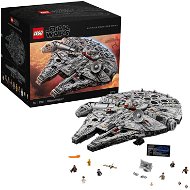
A textbook example of everything listed above is the LEGO® Star Wars Millennium Falcon 75192, which has consistently held above its recommended retail price on the secondary market. Licensed cars such as the LEGO® Technic Ferrari Daytona SP3 42143 work similarly, bridging LEGO fans with devotees of a particular car brand.

LEGO sets confirmed for retirement in 2026
2026 will bring collectors a number of opportunities. Sets that have featured among top picks for adult fans for many years will gradually disappear from shelves. All models listed below have been officially confirmed for retirement. Once they disappear from official distribution, their future is taken over by the secondary market – and there, availability, the condition of unsealed copies, and demand for the specific theme are what count.
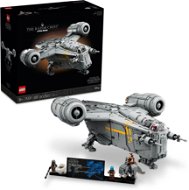
The flagship of the LEGO Star Wars Ultimate Collector Series, with 7,541 pieces, has been one of the most iconic LEGO models ever since its launch in 2017. Its price on the secondary market has consistently held above the recommended retail price even while it is still on official sale – which is in itself an eloquent signal.
LEGO® Technic Ferrari Daytona SP3 42143
A detailed tribute to the Italian supercar at 1:8 scale, combining a powerful automotive licence with premium craftsmanship. The model works brilliantly as a display piece as well as a building challenge for more advanced LEGO Technic fans.
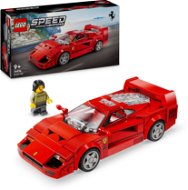
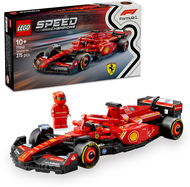
An ideal entry point into the world of collectibles. Compact format, accessible price, a piece of automotive history. Precisely the type of model that performs best in practice – easy to store, inexpensive to ship, and appealing to a wide group of buyers.
LEGO® Ideas Dungeons & Dragons: Red Dragon's Tale 21348
Created in collaboration with Wizards of the Coast, this set brings the fantasy world straight onto your desk. The LEGO® Ideas line is traditionally accompanied by strong collector interest, because its models are born from fan designs and often have no equivalent anywhere else in the portfolio.
LEGO® Star Wars Darth Vader's TIE Fighter 75389
This model, featuring an exclusive Jedi Vader minifigure, is one of those pieces where the unique LEGO minifigure itself constitutes a substantial part of the collectible value.
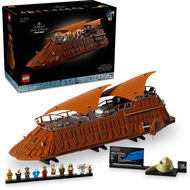
One of the most eagerly anticipated Ultimate Collector Series models, containing no fewer than 11 collectible LEGO minifigures. Details like these are precisely what transform an ordinary box into a piece that more people want to own than the number produced.
Which LEGO themes do collectors follow the most?
With collectible LEGO sets, it is not only the specific model that matters, but also the theme it belongs to. Some themes have historically had an exceptionally strong following; others shot up in value precisely because few people bought them at the time of sale – making their rarity all the greater today.
Most popular LEGO themes for collectors:
- LEGO® Star Wars – strong film licence, large fan community, collector-tracked models from the Ultimate Collector Series (e.g. Millennium Falcon, AT-AT, Jabba's Sail Barge).
- LEGO® Technic – particularly attractive for licensed cars and technical models; collector interest in sets such as Ferrari Daytona SP3, Lamborghini Sián, Mercedes-Benz G 500.
- LEGO® Ideas – models born from fan designs, often with a strong story; examples: Home Alone, A-Frame Cabin, Dungeons & Dragons: Red Dragon's Tale.
- LEGO® Icons and LEGO® Architecture – series for adult builders; display models for the home interior; iconic buildings, film motifs, and historical vehicles are of particular interest.
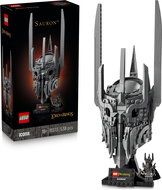
- LEGO® BrickLink Designer Program, LEGO® Lord of the Rings, LEGO® Speed Champions – smaller or niche themes that appeal through limited availability, a strong licence, or nostalgic value.

The most valuable LEGO sets in the world
When you look at the most expensive LEGO models in the world, you get a clear lesson in what makes the bricks valuable. A common denominator of record prices is usually rarity, limited distribution, and a compelling story.
World LEGO record-holders:
- San Diego Comic-Con 2013 Spider-Man – estimated value over USD 16,540. A limited edition produced exclusively for attendees of the convention.
- LEGO® Star Wars 10123 Cloud City – the most valuable widely sold model, priced at around USD 15,880. Valued mainly for the rare Boba Fett minifigure with printed hands and legs.
- 700-5-2 Gift Package – the highest recorded value increase: a staggering +319,342 % over the original price.
- LEGO® Star Wars 10143 Death Star II – the largest retail set with 3,441 pieces; has sustained an above-average value over the long term.
- LEGO® 1066 Little People with Accessories – the set with the most minifigures in history (36 pieces).
- LEGO® 10182 Cafe Corner – the most widely owned collectible model, which in 2007 launched the iconic modular buildings line.

When someone mentions a collectible LEGO model, most people picture a large box containing a flagship set from Star Wars. The reality is often quite different – the highest value-to-size ratio is found precisely in LEGO minifigures. They take up minimal space, are easy to store and transport, and truly rare editions can command higher prices than large sets. For many collectors they represent the ideal entry point into the hobby, because you need neither a warehouse nor a large budget.
A minifigure's value is determined mainly by a limited print run, the exclusivity of a specific event, manufacturing defects (so-called misprints), or its connection to a sought-after set.
The most valuable LEGO minifigures:
- Superman in the black suit – value around USD 9,545. Currently the most valuable minifigure of all time. It comes from San Diego Comic-Con 2013 and only 200 pieces were produced.
- Spider-Man – another exclusive from the same convention, available only to a small group of fans at the event itself.
- Mr. Gold – a limited edition from the LEGO Minifigures series, produced in 5,000 copies, each with its own serial number.
- C-3PO in 14-karat gold – a special 2007 edition marking the 30th anniversary of Star Wars; estimated value around USD 200,000.
- Boba Fett from Cloud City – the most valuable version is the one with printed hands and legs.
- Finch Dallow (sw1005) – the minifigure with the highest recorded value increase: +30,748 %.
- Commander Fox (sw0202) – the most widely owned minifigure in history; manufacturing-error variants, however, reach market prices in the thousands of euros.
An important nuance is that most valued minifigures are part of larger sets. If you sell a minifigure separately, the complete model instantly becomes an incomplete collectible – and its value drops. Some sets are, in aggregate, more valuable when sold piece by piece; others are more advantageous to keep whole. There is simply no universal answer here, and each collector must decide for themselves.
The minifigure market is more specialised than the set market. There are fewer buyers, but they are experienced and often know exactly what they want. That means a higher chance of a good price, but also greater pressure on precise descriptions, photographic documentation, and provenance.

Storing LEGO sets: a detail that can determine the price
Storage is one of the most underestimated aspects of collecting. Even a rare model can lose a substantial part of its value if the box is dented, the print faded, or the instruction booklet mouldy. Poor conditions can sink the price faster than you might think.
The ideal environment is a dry, darker room with a stable temperature. A damp cellar or an uninsulated attic are a LEGO set's worst enemy – moisture destroys boxes, crushes instruction booklets, ruins stickers, and in extreme cases allows mould to take hold, which can spread surprisingly quickly. The second killer is direct sunlight, which gradually bleaches both the box print and the individual bricks.
Practical storage rules:
- Room temperature or slightly cooler; humidity ideally below 60 %
- No direct sunlight
- Do not stack boxes in tall columns – the ones at the bottom will be crushed under the weight
- Protection against rodents and insects (they attack paper components)
- For more valuable models, secure and insure the collection
- When purchasing, photograph the condition of the box and keep the receipt
For more valuable pieces it pays to take one extra step. Keep the receipt, photograph the box immediately after purchase, and make a note of the purchase price. Such documentation will be very helpful when selling – it proves provenance, the condition at the time of purchase, and that the piece was handled with care. Often it is precisely this small detail that decides whether a buyer pays the full price or starts to haggle.
How and where to sell LEGO sets?
When selling, everything depends on what model you are offering and to whom. More common sets will reliably find buyers even locally. Rarer pieces, unsealed Ultimate Collector Series models, or limited LEGO minifigures will typically earn more on international platforms, where the audience of buyers is more experienced and wider.
Where to sell:
- BrickLink – the best choice for rare models, minifigures, and individual parts. Buyers are experienced and know what they are buying.
- eBay – suitable for more expensive and specific pieces where international reach is worthwhile.
- Aukro and Bazoš – a practical option for the Czech market. Sales tend to be faster, but prices are usually lower than abroad.
- Facebook Marketplace and collector groups – suitable for local sales and personal handover.
- Your own online shop – the most advantageous option for regular sellers. No third-party commissions, but it requires time, marketing, and bookkeeping.
i
Alza Tip: See LEGO sets in person
If you would like to see LEGO sets before buying, Alza offers a great opportunity. Visit the Alza showroom in Prague-Holešovice, where you will find a wide selection of LEGO models. In our Brick Zone you can browse over 300 popular LEGO sets, and trained sales staff will be on hand to help you choose. The most popular models are even assembled, so you can see exactly what a pile of bricks hidden in a box will look like. This showroom is the ideal place for anyone who wants to see LEGO sets in person before deciding to buy.
Frequently asked questions about LEGO sets as an investment
Are LEGO sets a good collectible investment?
They can be an interesting collectible opportunity, but no one guarantees a return. Value depends on demand, packaging condition, availability, and the popularity of the specific model. The highest chance of appreciation belongs to unsealed sets nearing retirement and models with a strong licence.
Which LEGO sets have the strongest collectible potential?
The most closely watched are models from LEGO® Star Wars, LEGO® Technic, LEGO® Ideas, and LEGO® Icons. Collectors are drawn to sets with a strong licence, exclusive minifigures, and an approaching retirement date.
What does LEGO retirement mean?
It is the official end of production of a specific model. After retirement, the set gradually sells out through official channels and any further movement in value is then determined by the secondary market – that is, the balance of supply and demand among collectors.
Does a collectible LEGO set have to remain sealed?
In most cases, yes. An unsealed model with intact packaging holds a higher value than one that has been opened or already assembled. For truly rare pieces, even a built version retains its value, but a sealed copy will sell for more.
Are large LEGO models better than smaller ones?
Not necessarily. Large flagship sets have a higher entry price, take up more space, and are harder to ship. Smaller and medium-sized models are easier to store, you can acquire more of them, and they typically sell faster.
Is it worth collecting LEGO minifigures?
Yes, they are an excellent entry point into collecting. They take up minimal space and, in the case of limited editions, can fetch higher prices than entire sets.
Where can I track LEGO set prices?
The best tools are BrickEconomy (historical price development and value estimates) and BrickLink (current listings from sellers worldwide). We recommend monitoring both sources simultaneously.
Where can I sell collectible LEGO sets?
Collectible pieces can be sold via BrickLink, eBay, Aukro, Bazoš, Facebook Marketplace, or in themed groups. For rarer models, international sales are worthwhile – foreign buyers typically offer better prices.
Which LEGO sets are worth watching in 2026?
Particular attention is deserved by LEGO® Star Wars Millennium Falcon 75192, LEGO® Technic Ferrari Daytona SP3 42143, LEGO® Technic Mercedes-Benz G 500 PROFESSIONAL Line 42177, LEGO® Speed Champions Ferrari F40 Supercar 76934, LEGO® Ideas Dungeons & Dragons: Red Dragon's Tale 21348, LEGO® Star Wars Darth Vader's TIE Fighter 75389, and LEGO® Star Wars Jabba's Sail Barge 75397. All are confirmed for retirement and are ideal candidates for expanding an investment collectibles collection.

In conclusion: LEGO sets as a collectible opportunity with common sense
When you look at LEGO sets purely through the lens of numbers and percentages, you miss what matters most. Truly interesting pieces combine a strong theme, quality craftsmanship, and impeccable packaging condition – without that, any collectible discussion is pointless. That is precisely why the community's attention stays focused on retired models, limited editions, and unique minifigures.
In 2026 the market is moving. Icons from LEGO® Star Wars, LEGO® Technic, LEGO® Ideas, and LEGO® Speed Champions are leaving sale, and their future value will not be decided by a price tag but by collectors, availability, and the condition of individual copies. LEGO sets also offer something that financial instruments can never provide – nostalgia, creativity, display value, and the joy of building. For many fans, the emotional value is just as important as the potential return. And that may be the most important thing of all.
If collectible LEGO models appeal to you, track prices on BrickEconomy, compare them with listings on BrickLink, and stick to models you understand and enjoy. Buy with realistic expectations – and who knows, in a few years you might look into your storage and find a nicely appreciated collection.
This article serves as a collector's guide and does not constitute financial advice.