



Alza Days - GPS Navigation for Automobiles

- The campaign runs from October 5 to October 26, 2026 (“Campaign”).
- The list of products currently available in the Campaign (“Products”) can be found on this website below.
- A Product is considered purchased at a discounted price as part of the Campaign only once the order has been confirmed by Alza and the payment has been completed by the customer. Simply placing the Product in the cart does not constitute a purchase. If the Buyer selects cash-on-delivery payment, submitting the order to Alza within the Campaign period is sufficient, but the discount will only be valid upon successful payment upon delivery.
- Alza reserves the right to limit the number of Products a single buyer may purchase during the Campaign for certain items. Should such purchase limits apply, Alza's system will automatically prevent buyers from adding more Products to their cart than the permitted purchase quantity for the duration of the Campaign.
- Available stock of select Products will be allocated among consumers in the Czech Republic, Slovakia, Austria, Hungary, and other countries served by Alza.
- Discounts on Products are valid only during the Campaign period or while supplies last. Alza reserves the right to change the selection of discounted Products at any time during the Campaign.
- The general terms and conditions of the Campaign can be found here.

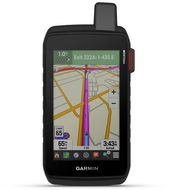


Alza Days - GPS Navigation for Automobiles - additional info
History of GPS
GPS (Global Positioning System) technology dates back to the 1970s, when the United States Defense Department commissioned scientists to craete a way of locating ones current location anywhere on the planet using a simple device. The result was the GPS satellite project, which was soon implemented. In the 1990s, GPS was only available to the military, but a crucial turning point came in 2000. Until then, precision GPS navigation systems for use by the military deliberately limited accuracy to tens of metres because of concerns that the system could be abused by terrorists. Bringing GPS to the entire population has brought great benefits and significantly accelerated the evolution of the technology. Today you can buy GPS car navigation devices as well as handheld devices for tourists (handheld GPS navigation). They offer accuracy up to tens of centimetres and at an affordable price.
How does GPS work?
The principle is very simple. A total of 24 non-stationary Navstar satellites are orbiting earth. Each satellite transmits information about its location, the exact time of the atomic clock, and the approximate positions of other satellites. GPS, which must have a clear line of sight to the sky in order to work, then uses the position calculation and the exact time difference between the sending and receiving of the data. So if GPS navigation receives and processes data from three satellites, it can determine its latitude and longitude. To calculate altitude, the GPS needs signals from four satellites - this is know an 3D positioning. Of course, the better the visibility of the sky, the more satellites a GPS can communicate with, and the more accurate the calculation of its current position.
What can modern GPS navigation do?
Many years have passed since the early days of GPS navigation, and modern instruments are no longer just boxes that churn out figures. Modern GPS devices for cars are compact, with clear touch-screen displays and many additional features, such as music and video playback or the ability to receive digital broadcasting. In addition, they generally come with advanced navigation software, which takes into account the state of traffic, the day and time of driving, and the condition of roads, and then uses this date to determine the best route. As well as GPS for cars, you can now buy GPS navigation for your laptop, not to mention integrated GPS systems in smartphones.
If you have any question about our products, services, transport or any other request, please contact our customer support.